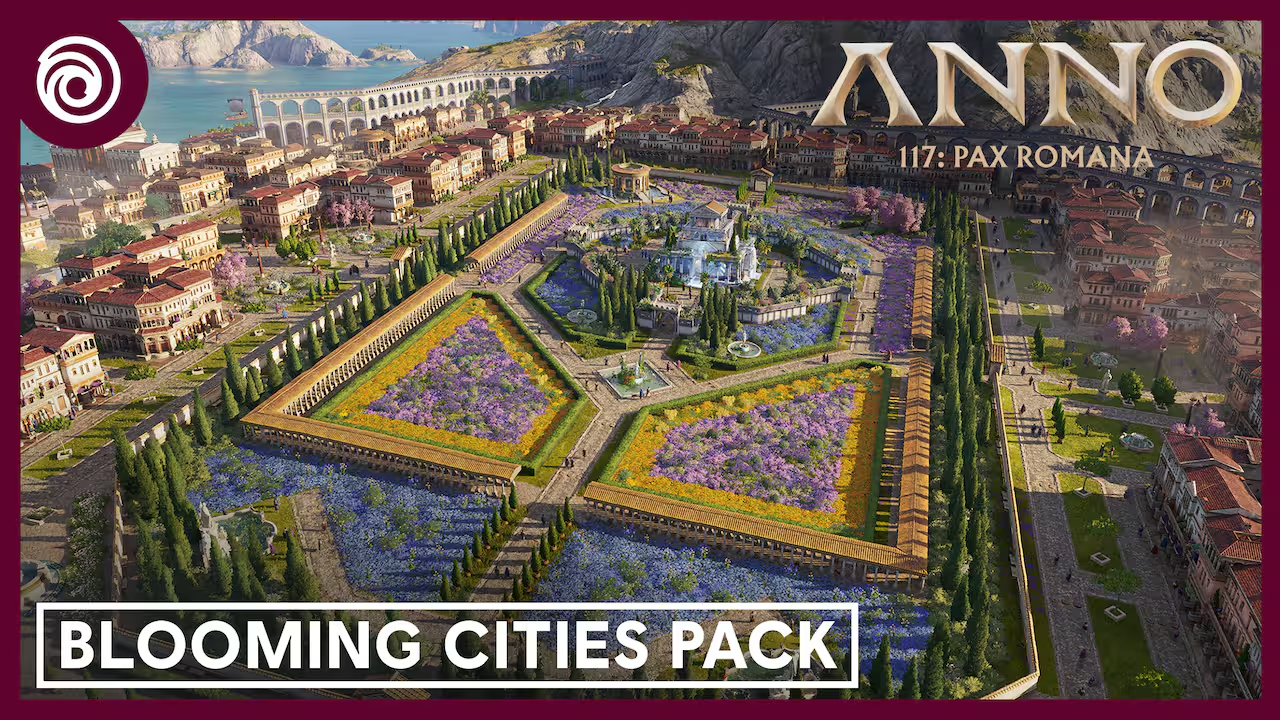
Ubisoft’s latest installment in the award-winning city-builder franchise transports players to 117 CE, during the height of the Pax Romana. Anno 117: Pax Romana places the immense weight of the Roman Empire squarely on your shoulders, challenging you to balance economic growth, cultural integration, and military dominance. Whether you are a veteran of the series or a newcomer looking to establish your first trade route, this entry introduces fresh mechanics and a rich, character-driven campaign that evolves alongside your cities.
A Narrative Built on Foundations
For the first time in the franchise, players step into the sandals of a defined protagonist, choosing between two siblings. You can play as Marcus Naukratius, a young man navigating the overwhelming responsibilities of sudden leadership, or Marcia Tertia, who steps up to challenge the societal norms of a male-dominated empire.
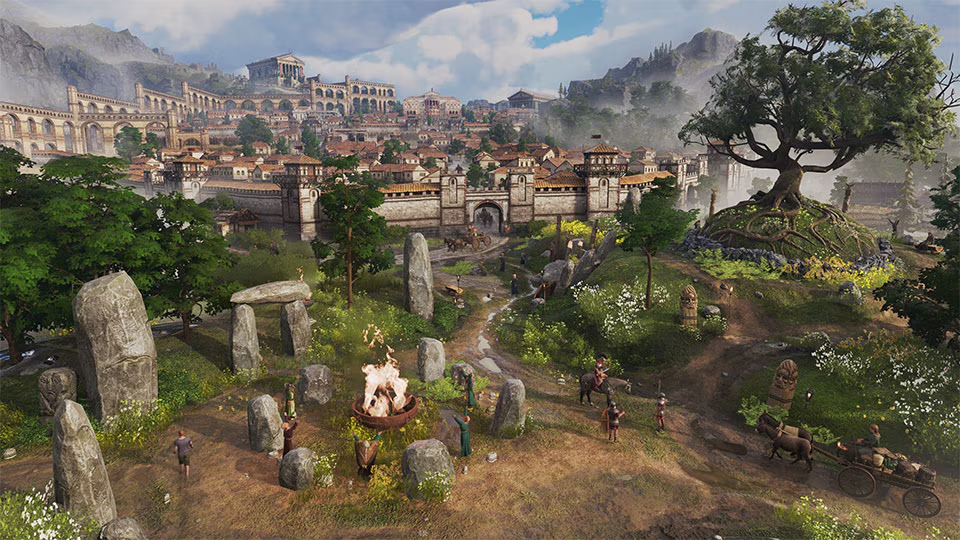
The campaign begins in the province of Latium, where you are tasked with rebuilding the city of Ambrosia—newly rechristened Juliana—following a catastrophic volcanic eruption. Guided by Ben Baalion, a seasoned imperial advisor, the story acts as a dynamic engine for gameplay. Narrative milestones naturally unlock core mechanics like diplomacy, resource management, and regional expansion. Without delving into spoiler territory regarding imperial politics or endgame faction choices, the campaign eventually pushes you into the wild, untamed frontier of the Celtic province of Albion, forcing you to adapt your leadership style to an entirely new culture.
Core Mechanics and City Management
At its heart, Anno 117 is about managing the intricate web of your citizens' needs. Your population requires a steady supply of Food, Public Services, and Fashion. Fulfilling these baseline needs triggers three vital outcomes: existing houses fill with more citizens, your tax revenue per house increases, and your population becomes eligible to upgrade to the next social tier.
As your citizens evolve—from Liberti (freed slaves) to Plebeians, and eventually to Equites and Patricians—their demands become more complex. A simple diet of fish and basic tunics will soon be replaced by demands for bread, sandals, and entertainment, requiring you to establish multi-step production chains (e.g., harvesting wheat, milling flour, and baking bread).
To support this growth, you must master the Discovery Tree. By building schools like the Grammaticus, you generate Knowledge points used to research over 100 unlocks, including new buildings, unit types, and repeatable economic bonuses. Religion also plays a tangible role in city planning. Dedicating a settlement to a specific deity grants powerful, game-changing modifiers. Pledging a city to Mars will heavily buff your military production, while honoring Epona, the Goddess of domestication, will increase animal farm yields and cart transport speeds.
A Tale of Two Provinces
The most significant strategic layer in Anno 117 is the management of multiple regions simultaneously. You will establish sprawling trade routes to ferry region-specific resources—like Latium's olives—across the sea to support your growing empire. At launch, players navigate two vastly different provinces, each demanding unique strategic approaches:
| Feature | Latium | Albion |
|---|---|---|
| Setting | Mediterranean Roman heartland | Celtic British frontier |
| Terrain | Flat plains, beaches, and cliffs | Marshlands, dense forests, rugged hills |
| Population Progression | Linear (4 tiers: Liberti → Patricians) | Branching (3 tiers, with cultural paths) |
| Unique Mechanics | Aqueducts, Marvels, diagonal roads | Marsh drainage, cultural alignment choices |
| Cultural Focus | Classic Roman production and deities | Choice between Romanization or Celtic preservation |
| Difficulty | Beginner-friendly | Advanced challenge |
Diplomacy, Trade, and Warfare
While peaceful expansion is entirely viable, the Pax Romana was often maintained by the edge of a gladius. Anno 117 features a robust naval and land combat system. Establishing shipyards allows you to construct fleets utilizing both sails and oars, which are essential for protecting your lucrative trade routes from pirate raids or aggressive AI neighbour's.
On land, combat incorporates melee, ranged, and siege units. The military system is deeply intertwined with your economy; recruiting an army requires a dedicated workforce and a functioning weapon production chain (mining copper, refining it with charcoal, and forging weapons). However, for players who prefer to govern with a softer touch, strong diplomatic relations and a formidable naval deterrent can often resolve conflicts before they reach your city walls, particularly when negotiating with local Celtic leaders in Albion.
Figure: High-resolution in-game capture
Get The Game
Instant digital purchase links & platform storefronts