Hunting in a Living Ecosystem: Monster Hunter: World Review
When Monster Hunter: World arrived on modern home consoles and PC, Capcom dissolved the segmented loading screens that had defined the franchise since the PlayStation 2. The result was a vibrant, seamless New World where apex predators actively stalk territory, dynamic weather influences behavior, and every hunt feels like an unpredictable wildlife documentary turned lethal.
The Fourteen Disciplines of Combat
No other action-RPG offers the staggering combat breadth of Monster Hunter's 14 distinct weapon classes:
- Great Sword: High-risk, immense-reward positioning requiring frame-perfect True Charged Slashes into monster weak points.
- Long Sword: The fluid elegance of Foresight Slashes and aerial Spirit Helm Breakers that parry monster tail sweeps in mid-air.
- Charge Blade & Switch Axe: Complex transformational gear that charges kinetic phials in sword mode before discharging catastrophic elemental discharges in axe mode.
- Ranged Artilleries: Bows, Light Bowguns, and Heavy Bowguns providing status afflictions, cluster bombs, and pierce shots from safety.
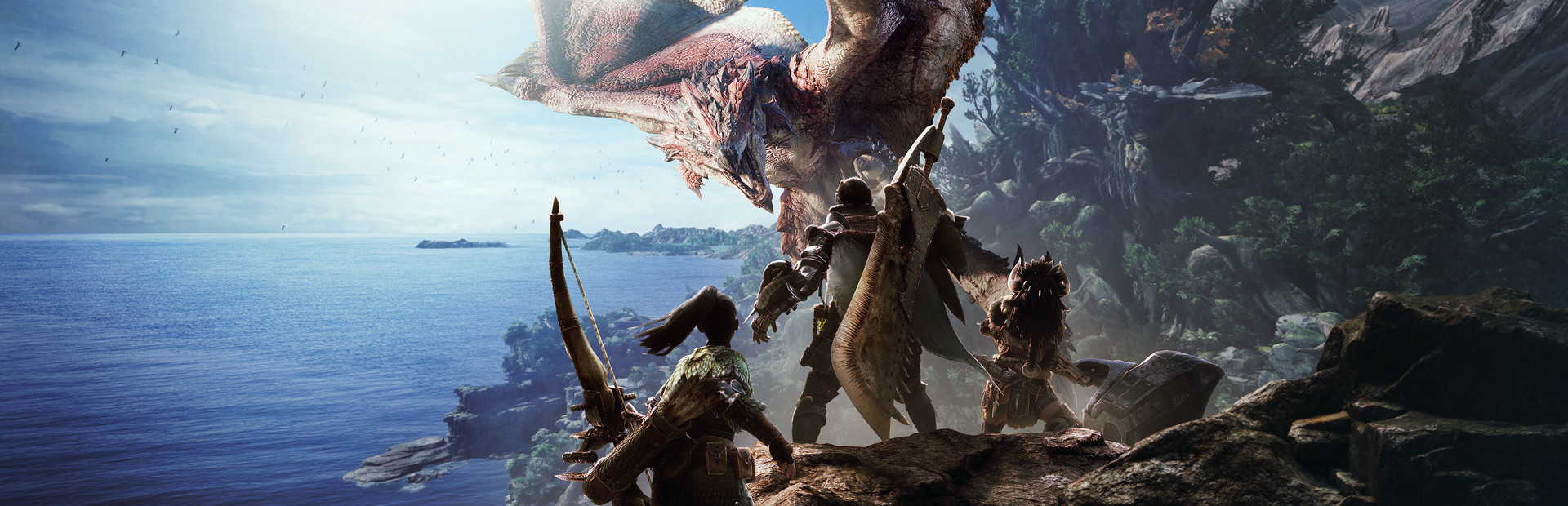
Figure: Hunters tracking an Anjanath through the dense Ancient Forest.
Turf Wars and Environmental Warfare
Watching a Rathalos dive-bomb out of the sky to engage in a vicious, unscripted Turf War against an Anjanath never loses its awe. Hunters can drop hanging boulders onto sleeping beasts, breach natural dam walls to wash monsters down canyon flumes, or shoot flash pods to blind Elder Dragons mid-flight.
Firing an SOS flare to summon three fellow hunters from across the world turns showdowns against Nergigante and Kirin into cooperative triumphs that keep players hooked for hundreds of hours.
Official Trailer
Get The Game
Instant digital purchase links & platform storefronts